SALVEA

Sovereign by design · enterprise by default

The hospital's control layer for AI.

Hospital Governance System (HGS). The EHR holds the patient's record. The HGS governs how AI may touch it.

Every model and agent your hospital runs, yours, ours, or any vendor's, answers through your own infrastructure under one set of rules: role-based access, human approval where it matters, and an audit trail that holds up to scrutiny. Patient data leaves the building only when you decide it may, and never without a record.

The AI assists; clinicians decide.

Single tenant, inside your boundaryZero egress by defaultEvery interaction auditedFlat licence · no per-user fees
See what it manages

The Hospital Governance System

Five jobs every hospital needs done for its AI. One system does them.

Admitting a new tool, keeping its record, checking it in service, holding agents to the same rules, and showing what care gets back. SALVEA does all five, inside the hospital.

01

Admission of a new tool

How a new tool enters the hospital.

A request names the tool, its vendor, what it will touch and who wants it. The intake review reads the vendor's documents, gives a first risk tier and routes the decision to the named approvers. No forms passed around by email.

Intake review · Approvals

How a new tool is admitted →

02

The tool record

One record of every tool, built or bought.

Each tool carries its version, vendor, risk tier, where it runs, who may use it, its evaluations and every approval behind it. A site can approve a tool itself or inherit its health authority's decision.

Models · Model Store

03

Assurance in service

Is every tool still safe and performing?

Performance, safety and impact tabs per tool, nightly self-tests, health checks and alert rules written as plain sentences. Clinician corrections are counted per day and per unit.

AI estate · Monitoring

04

Agents under the same rules

Agents are governed like models.

Each agent declares its tools and access scopes. What it may read, what it may do and what must stop for a clinician are set per agent, and every call is recorded.

Agents · Connectors

05

What care gets back

What the hospital gets back for its AI.

Use by department, role and clinical workflow. Hours returned to clinical work, approval rates and held actions, each figure naming the records it was counted from. A board report in one download.

Value · Board report

Then the part that watching cannot do.

Governance that sits outside the call can only watch. SALVEA sits in the path of every call, so it can act on the rules as well as report on them.

Governance from the outsideSALVEA, in the path of every call
Records that a tool answeredDecides which tool may answer and for whom, before the call is made
Alerts when an answer looks wrongWithholds an answer with no approved source, and says so
Reports what an agent didHolds a consequential action until a named clinician approves it
Logs activity in a vendor's cloudRuns inside the hospital; an outbound call happens only under a rule, and each one is recorded
Keeps an activity logKeeps a hash-chained ledger: a removed or edited row breaks the chain

01 · Without governance

Every vendor ships a model. Nobody ships the governance.

A hospital can buy a model from any vendor and have it answering questions inside a week. What it cannot buy is the answer to who asked, what was retrieved, which policy applied, and who approved the result. The model arrives. The rules around it do not.

Five questions most hospitals cannot answer today:

  • Which model answered this question, and what did it read to get there?Answered by: Audit › Answer trace
  • Who is allowed to ask it, and who is allowed to act on its answer?Answered by: Users & access · guardrail tiers
  • Where did the patient data go, and who can prove it stayed inside?Answered by: Boundary record · Sovereignty evidence
  • What changed in the model since yesterday, and who told the clinicians?Answered by: Model registry · version history · chat notices
  • When the answer was wrong, who was watching, and what did they do?Answered by: Flagged answers · Cases

What that costs:

  • Decisions you cannot defend, because no one recorded who decided or on what.
  • Data that leaves the building through a path no one mapped.
  • Models that change overnight, with no notice to the clinicians who rely on them.
  • Approvals that happen, or do not, with no record either way.
  • Trust that erodes every time an answer cannot be explained.

None of this is an argument against AI in hospitals. It is an argument against ungoverned AI in hospitals.


02 · With SALVEA

One runtime. Every vendor. Your rules.

SALVEA sits between every model the hospital runs and the people who rely on it. Yours, ours, any vendor's, on your hardware or in a cloud you approve: every call runs under the same rules and the same audit trail. Patient data stays in the building unless you decide otherwise. The AI assists; clinicians decide.

  • Every answer carries its model, its sources, and the policy that let it through.
  • Access is role-based, so the right people ask and the right people act.
  • Egress is a policy you switch on, not a default you discover.
  • Model changes are versioned and announced before they reach a clinician.
  • Sensitive actions open an approval request, and every approval is recorded.
  • Every decision is signed by the clinician who made it, with the reasoning attached.
  • Every answer can be explained, so trust is earned, not eroded.

The vendors do not govern your hospital. You govern the vendors.

03 · For the people accountable

Money. Risk. Effort. Oversight. Scale.

The CFO

One flat licence per building. Nothing metered. No per-user, per-token or per-note fees. Buy the hardware or lease it month to month. If you switch on a cloud model, its usage is your own contract with that vendor. The time clinicians get back on documentation, discharge summaries and record lookups pays for the platform, and with no meter there is no rationing and no shadow AI.

Legal and security

Every answer leaves a record. Who asked, which model, what it read, who approved. Patient data stays inside by default; anything that tries to leave without a policy is blocked and logged. A cloud model, if you approve one, runs under the same record. One export answers your privacy review.

Your IT team

Single tenant, inside your network, running unaided by day 30. Any model that speaks standard endpoints works, on your own hardware or, if the hospital approves it, a cloud model such as Claude or GPT, governed the same way. It launches from inside the chart. One command centre shows every department, ward, device and model.

The CEO, CTO and COO

The whole hospital on one screen, on demand. Zoom out for the live picture; drill into any patient journey, alert or audit trail; ask a plain-language question and get a grounded answer with its sources. The view your board asks for, without waiting for the monthly meeting.

Canada

The health authority and the ministry

One set of rules across every site in the province. Each hospital runs its own tenant inside its own boundary; the health authority sets policies, tiers and approved models once and sees every site together. Data stays in the province, on hardware the institution owns or leases. If the authority approves a cloud model, it approves it once and every site inherits the decision. The evidence pack answers each site's privacy impact assessment under PIPA, FIPPA or PHIPA in one export, and the per-building licence keeps the budget line predictable across a multi-year plan.

United States

The multi-hospital health system

One set of rules across every hospital in the system, in every state. Picture a twelve-hospital system across three states: each hospital runs its own tenant inside its own walls; the system sets policies, tiers and approved models once; compliance sees every site together. Patient data stays in the facility by default, so the business associate footprint stays small and each state's privacy rules apply per site. If the system approves a cloud model under its own business associate agreement, every hospital runs it under one policy. Every answer carries its sources, giving clinicians an independent basis to review and giving compliance the record a HIPAA audit asks for.

On your hardware by default · in the cloud by decision

Claude and GPT, under the same rules.

SALVEA runs inside the building. If an institution chooses to use a cloud model, it runs under the same policies, roles and audit trail as everything else, and what may reach it is the institution's decision.

04 · Core pillars

Governance by design

Zero egress

Models, retrieval and audit stay inside the institution's boundary unless you decide otherwise. Egress is a policy you switch on, not a default you discover.

EGRESS_PROTOCOL: OFF_BY_DEFAULT

Human in the loop

Sensitive actions open an approval request with the exact content and the triggering policy. Nothing is filed on its own.

HUMAN APPROVAL REQUIRED

End-to-end audit

Every message, retrieval, action and approval writes an audit event: who asked, which model, what was retrieved, how the answer was formed.

AUDIT_STREAM: IMMUTABLE

Your infrastructure

Bedside edge, unit node, hospital server room or provincial data centre: each model carries its deployment location and guardrail tier.

DEPLOY_TIER: CRATON_FLEET

A new system in the hospital

Hospital Governance System · HGS

A hospital already runs an EHR for the patient record, a LIS for the laboratory and a PACS for imaging. None of them governs the models and agents now answering clinical questions: who may ask, which model may answer, what may leave the building, and who signed the decision. That is the Hospital Governance System, and SALVEA is one.

EHR

Electronic Health Record

The patient's record

LIS

Laboratory Information System

Laboratory results

PACS

Picture Archiving and Communication System

Imaging

HGS

Hospital Governance System

How AI may touch any of them

05 · Three layers, one institution

A unified clinical stack

Hardware, runtime and clinical products, each owned by the institution, each auditable end to end.

  1. Model Store

    Clinical products the institution chooses to run, each with its own evidence, evaluation history and guardrail tier.

  2. SALVEA · the Hospital Governance System (HGS)

    The governed runtime: who may ask what, which model answers, what needs a clinician's decision, and the record of all of it.

  3. CRATON

    Compute that lives in the hospital: bedside devices, unit nodes and the server room, monitored as one fleet.

MODEL STORE
SALVEA
CRATON

06 · What runs on it

Products under the same rules

Governed chat

Answers only from the approved library, with a receipt for every answer and "no source" when the library has none.

Governed by SALVEA. Audited end to end.

Clinical documentation

Note drafting and intake review; the clinician signs, nothing files itself.

Governed by SALVEA. Audited end to end.

Any vendor's model

On your hardware or in the vendor's cloud, once approved. Registered, evaluated, tiered and health-checked before routing will use it; version changes announced to clinicians before they take effect.

Governed by SALVEA. Audited end to end.

Your own models

Same rules, same audit trail, no exemptions.

Governed by SALVEA. Audited end to end.

Every product above, including ours, sits in the Model Store with its evidence, evaluation history and guardrail tier.

See it

From the demonstration hospital

Synthetic data only.

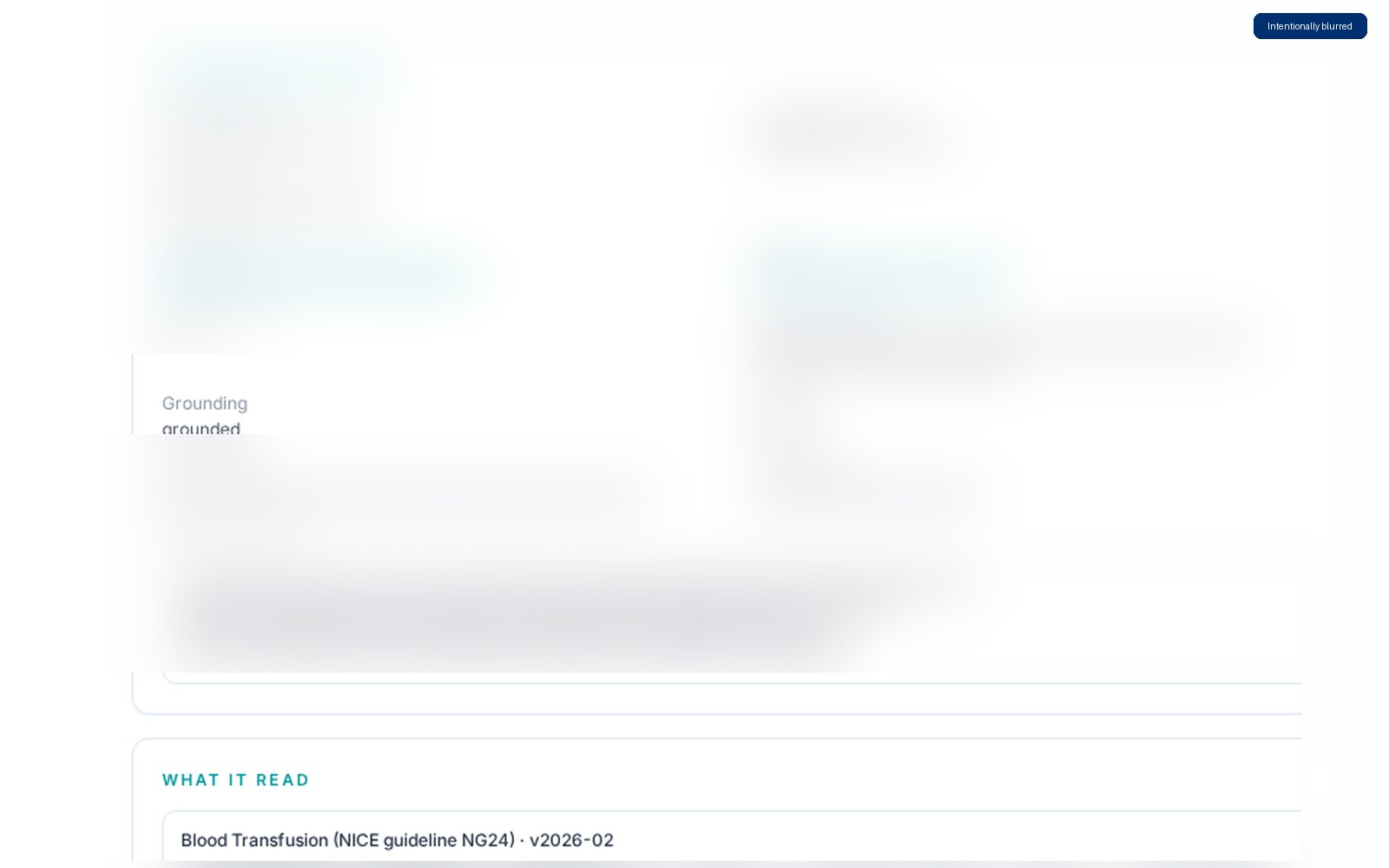
Intentionally blurred Answer trace receipt with its grounding state and cited document in focus
Answer trace: the grounding state and the documents and versions used for an answer. Detail blurred intentionally for confidentiality.
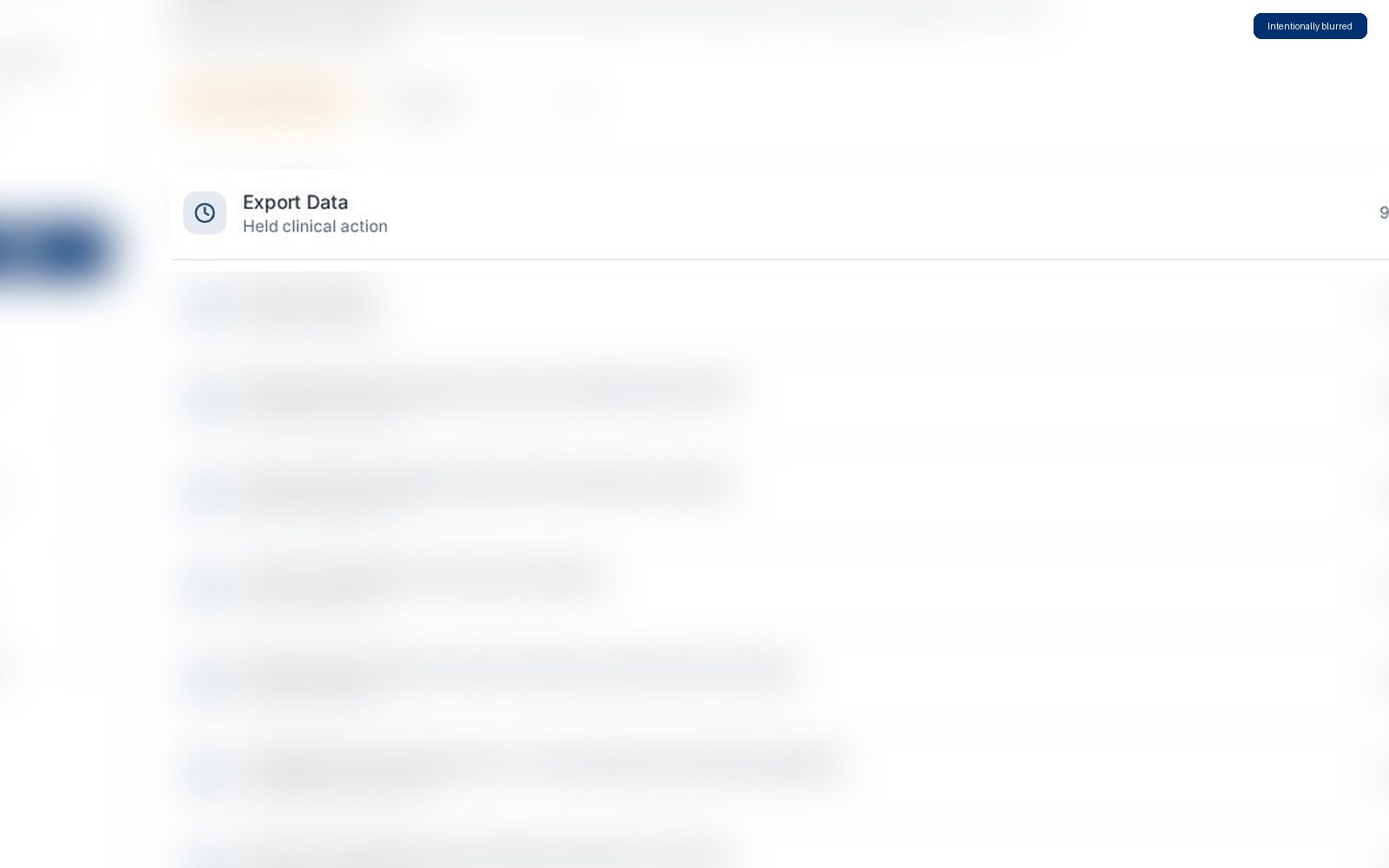
Intentionally blurred Approvals queue with its first row in focus
Approvals: held actions and sign-offs wait here for a named person. Detail blurred intentionally for confidentiality.
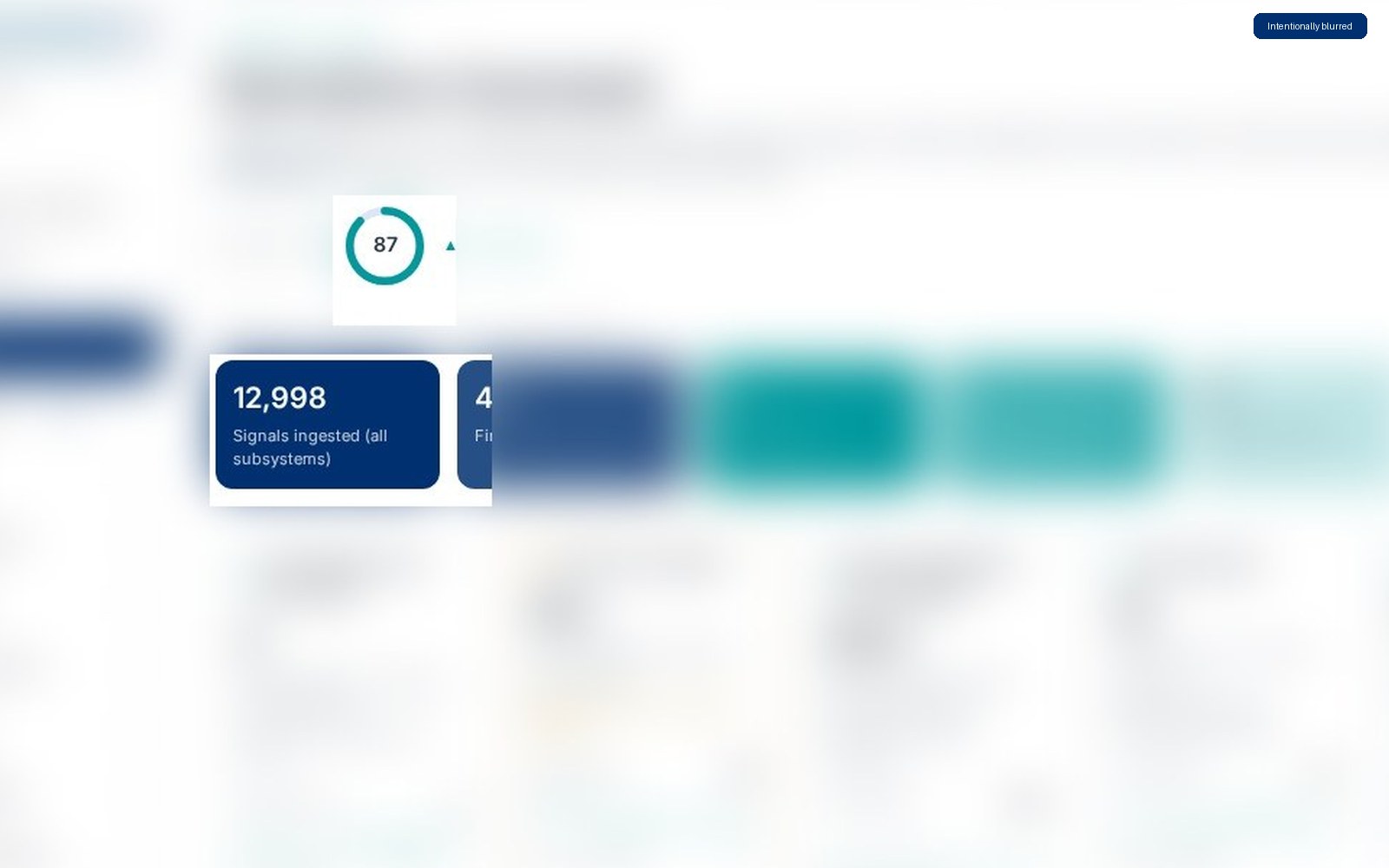
Intentionally blurred Operations Command with its posture ring and one tile in focus
Operations Command: posture, outbound requests and the device fleet on one screen. Detail blurred intentionally for confidentiality.